Our Craft
A tradition centuries in the making
Where Bhaktapur's woodcarving comes from, what the carved windows mean, and how each piece is made by hand.
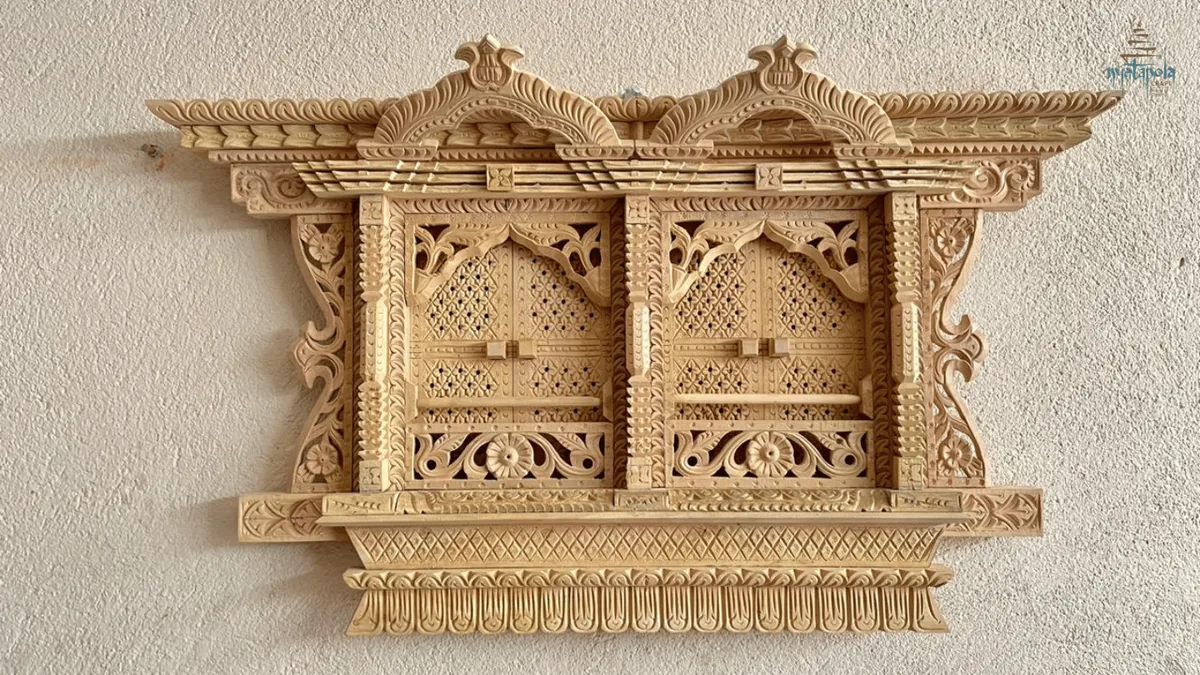
Nepal has a long tradition of building temples and palaces, with finely carved woodwork found throughout their structural elements. The Durbar Squares of Patan, Kathmandu, and Bhaktapur hold abundant examples of richly carved temples, monasteries, and mathas, the priests' houses, decorated with sculptures of deities, demons, and animals, with tudal struts, and with carved lattice windows revealing intricate peacocks and other designs.
Woodcarving is deeply embedded in traditional craftsmanship, with skills passed down through generations of Silpakars and Kasthakars. Since tourism began arriving in the 1950s, visitors drawn to the carved Malla and Shah era buildings sought souvenirs of their visit, sparking an industry that revived these skills. The growth of new hotels and traditional style homes with modern conveniences has further encouraged carving in both facades and interiors.
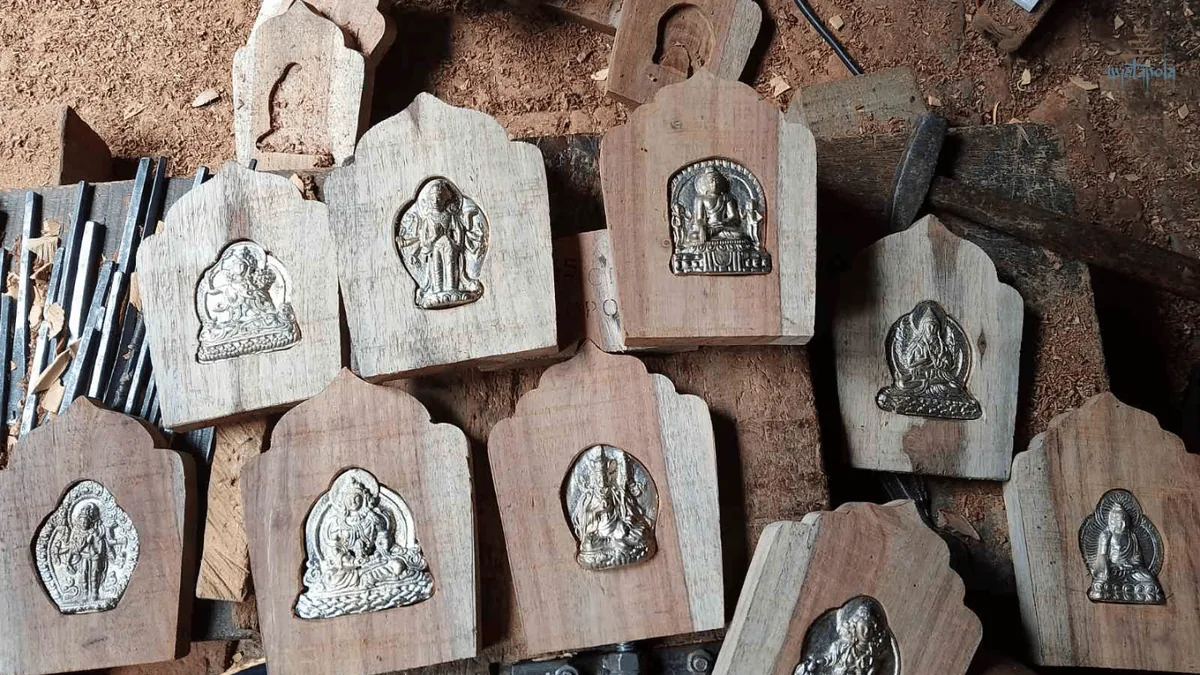
Today, Bhaktapur's woodcarving craftsmanship lives on in windows, doors, mirror frames, decorative furniture, wall hangings, mythological figures, chests, boxes, and figures of gods, goddesses, and animals.
About Windows
More than a view
For Nepali people, windows represent far more than ventilation. It is believed that the religious icons carved into them offer protection from calamity and bring peace and prosperity into the home. Not all carved windows are meant for looking out: some are designed purely as embellishment, while others, especially balcony windows, allow a view through an openable central shutter.
The general term for a latticed Newar window is tiki-jhya (or tika-jhya), with "jhya" being the Newari word for window, which entered Nepali as "jhyal". Some of the specific varieties include:
How a piece is made
From seasoned wood to finished carving
Seasoning the wood
The wood is dried thoroughly in the sun, and the required size is cut from larger chunks.
Design
Patterns are adapted from ancient monuments and religious texts, then sketched onto paper.
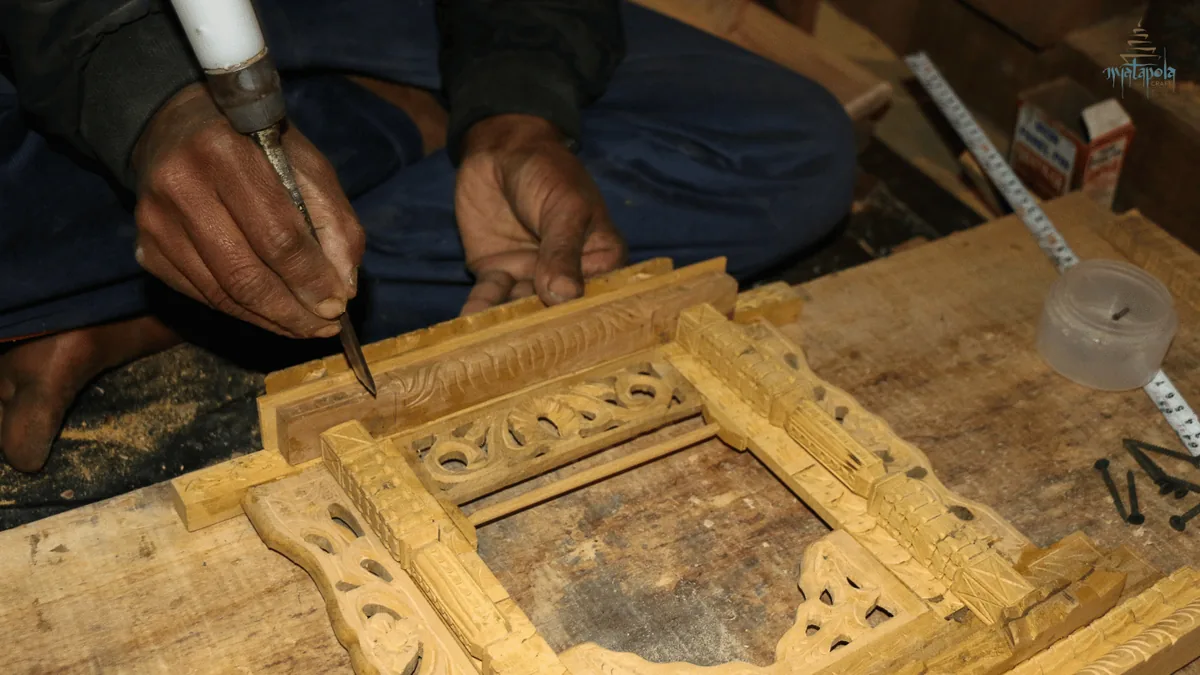
Carving
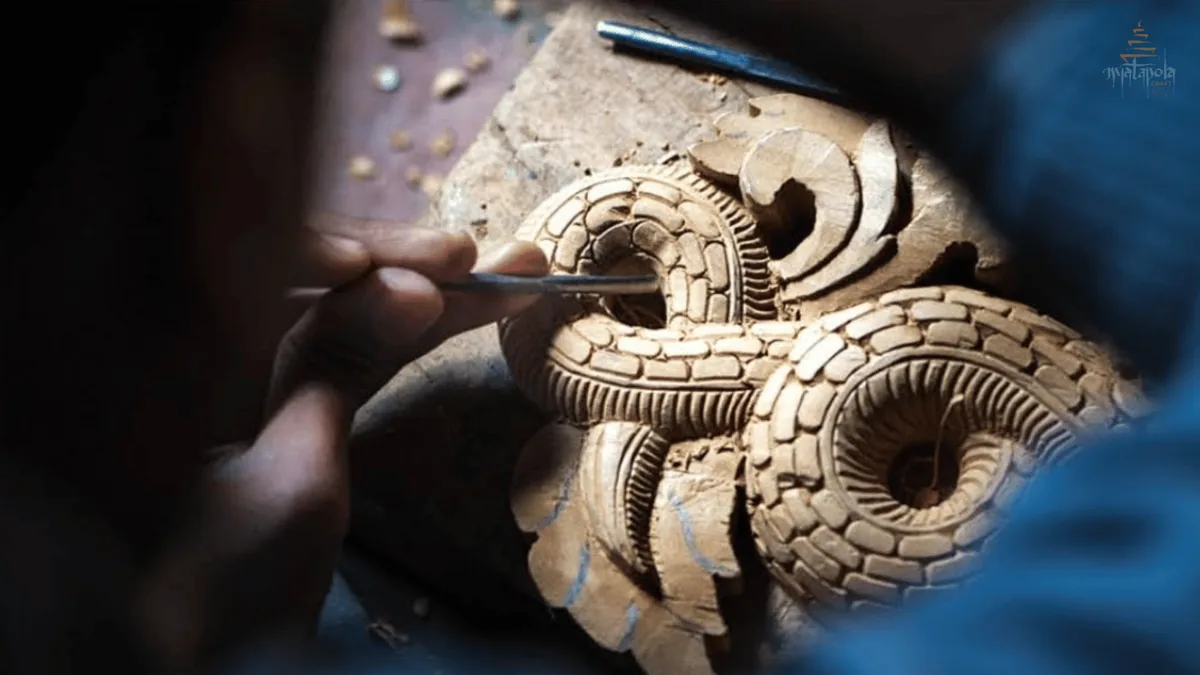
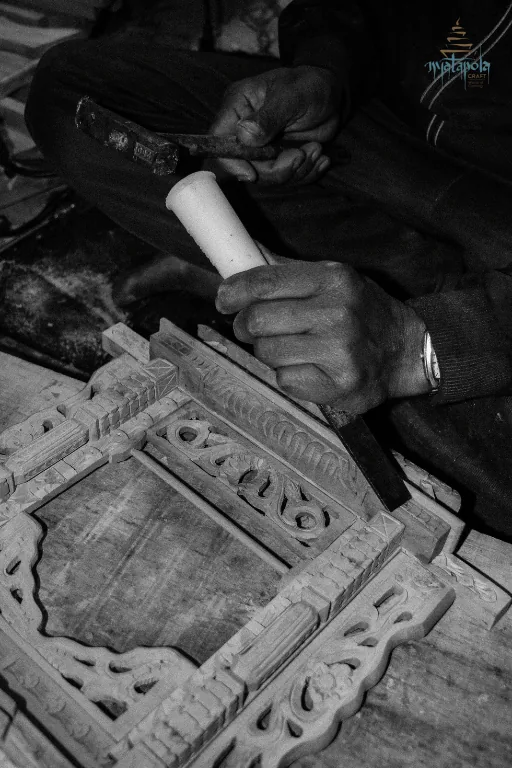
The design is carved by hand in fine detail using chisels.
Joining and leveling
The carved parts are assembled, joined, and leveled into the finished form.
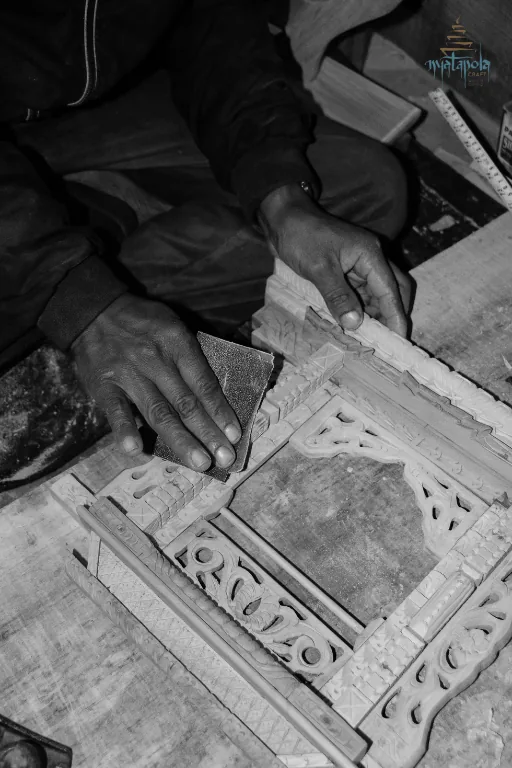
Sanding
The surface is sanded in stages, working from rough to fine.
Finishing
The piece is stained two to three times with a spirit and colour mix, with drying time between coats.
Bring a piece of Bhaktapur home
Tell us what you are looking for and our team will help you find or commission the right piece.
Enquire on WhatsApp